How Fast Can You Deploy After a Disaster?
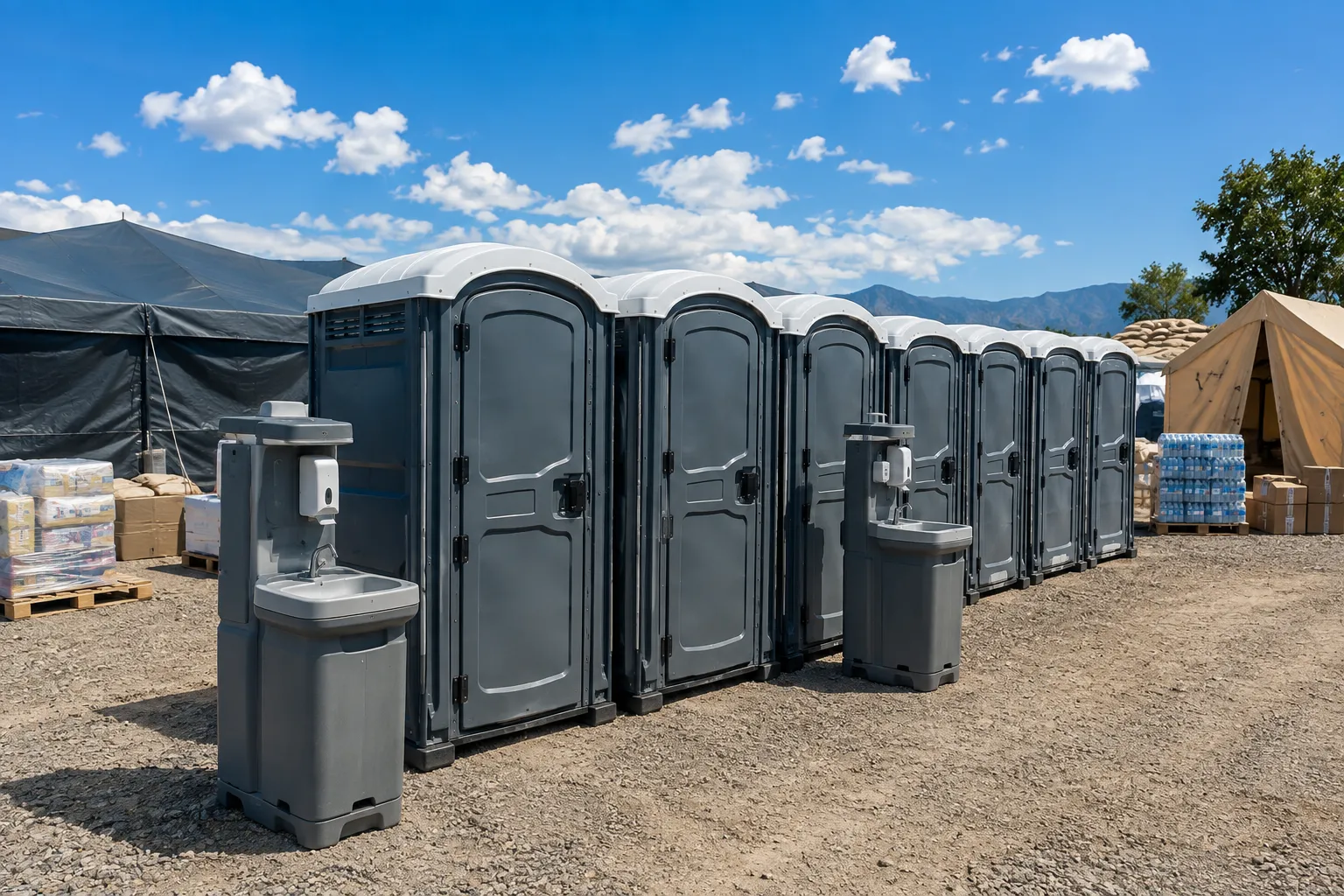
Speed is the whole point of this service. Glendora Porta Pros keeps stock ready to move on short notice, because disaster sanitation cannot wait on a normal delivery schedule. A roll-off delivery needs about 60 feet of straight clearance behind the truck, so we scout staging lots, parking lots and open fields near shelters before the trucks roll. If a Red Cross shelter opens at a school gym or a church hall, we can usually have emergency porta potty rental units on site same day, weather and road access allowing.
Glendora sits close enough to several communities that a regional disaster response can pull equipment from more than one direction. San Dimas is 4.6 miles southeast, Charter Oak is 4.6 miles south, and Azusa is 4.9 miles west, so if Glendora's own supply runs short during a widescale event, nearby depots are not far to reach. We coordinate delivery routes the same way for porta potty rental in Glendora during normal weeks, just compressed into hours instead of days.
For anyone displaced and camping in a yard or a parking lot while a home gets assessed, a camping porta potty or a single standard porta potty rental can bridge the gap until plumbing is restored. Shelters with larger crowds usually need a mix of standard units and at least one accessible unit, since ADA Standards 213.2 requires that where portable toilets are clustered, at least 5 percent, and never fewer than one, be accessible.
What Sanitation Does a Disaster Shelter Actually Need?
A shelter needs toilets, handwashing and a way to keep both running without a break in service. OSHA 1926.51(c) sets toilet ratios by headcount, one facility for 20 workers or fewer, scaling up from there, and that ratio is a reasonable starting point for shelter population too. Handwashing matters just as much: 29 CFR 1910.141(d)2 requires soap and towels or a hand-drying device, not hand sanitizer alone, so a handwashing station rental or portable sink rental needs to sit next to every restroom cluster, not instead of it.
Water access cannot be assumed after a disaster. OSHA 1926.51(a)(1) requires an adequate supply of potable water at any place of employment, and that standard applies just as much to a shelter staging site as a construction yard. We pair portable restroom rental units with filled water tanks and standalone hand sanitizer station rental units as backup, not a replacement.
Debris and downed material often show up alongside sanitation needs. A roll-off dumpster rental clears storm debris fast, and OSHA 1926.25 calls for scrap and debris to be cleared from work areas, which applies directly to relief staging zones. If the site also needs to keep gear secured, temporary fence rental and a storage container rental protect supplies overnight.
| unit | duration | typical price |
|---|---|---|
| standard | day | $150 |
| ada | day | $230 |
| standard | week | $200 |
| dumpster | day | $75 |
| fence | day | $50 |
Where Do These Units Get Placed on a Disaster Site?
Placement follows the same rules as any other job, just under more pressure. ADA Standards 403.5.1 requires a 36 inch clear accessible route, and 404.2.3 requires a 32 inch clear door opening, so accessible units need firm, level ground nearby, matching ADA Standards 302.1's requirement that floor and ground surfaces stay stable and slip resistant. In a muddy field after flooding, that often means gravel pads or plywood runners before a single unit gets set.
A standard unit measures about 44 by 48 inches on the ground and stands roughly 92 inches tall, with a 60 to 70 gallon holding tank, so plan clearance the same way you would for porta potty placement guide jobs on a normal site. Glendora's terrain runs from flat commercial lots to sloped residential streets, and slope matters for ramps too: ADA Standards 405.2 caps ramp running slope at 1:12 wherever a wheelchair-accessible unit needs a ramp up from grade.
If a disaster drags into a multi-week recovery, service intervals matter more than day-one delivery. ANSI/PSAI Z4.3 sets a baseline of one service visit per week for up to 10 users over a 40 hour week, though shelters running around the clock typically need more frequent pumping. A septic pumping service or holding tank rental can support a longer-term relief camp once the first 72 hours pass. For full builds, check construction site services or start with how many porta potties do i need to size the order.
How quickly can units arrive after a disaster is declared?
Often same day, depending on road access and how many other sites are calling at once. Glendora Porta Pros prioritizes shelters and command posts first. Call Glendora Porta Pros directly rather than submitting a routine request a quote form during an active emergency.
Do disaster relief sites need accessible units too?
Yes. ADA Standards 213.2 applies regardless of the emergency, requiring at least 5 percent of clustered units, and never fewer than one, to be accessible. See ada accessible porta potty for unit specs.
What if the shelter site has no water hookup?
That is normal for disaster response. We bring self-contained units and pair them with filled water tanks, plus a handwashing station rental unit, so OSHA 1926.51(a)(1)'s potable water requirement is still met.
Can you service units daily during an active shelter operation?
Yes, service frequency scales with population and usage, well above the ANSI/PSAI Z4.3 baseline interval when a shelter is running continuously. Ask about daily service when you place the order.
Is dumpster service available alongside restroom units?
Yes. Storm debris and shelter waste both need a roll-off dumpster rental, and we deliver both together on the same trip whenever the site allows the clearance.
Next step
Get a delivery date
Tell us the address, the dates and the headcount. We size the order and confirm the route.