
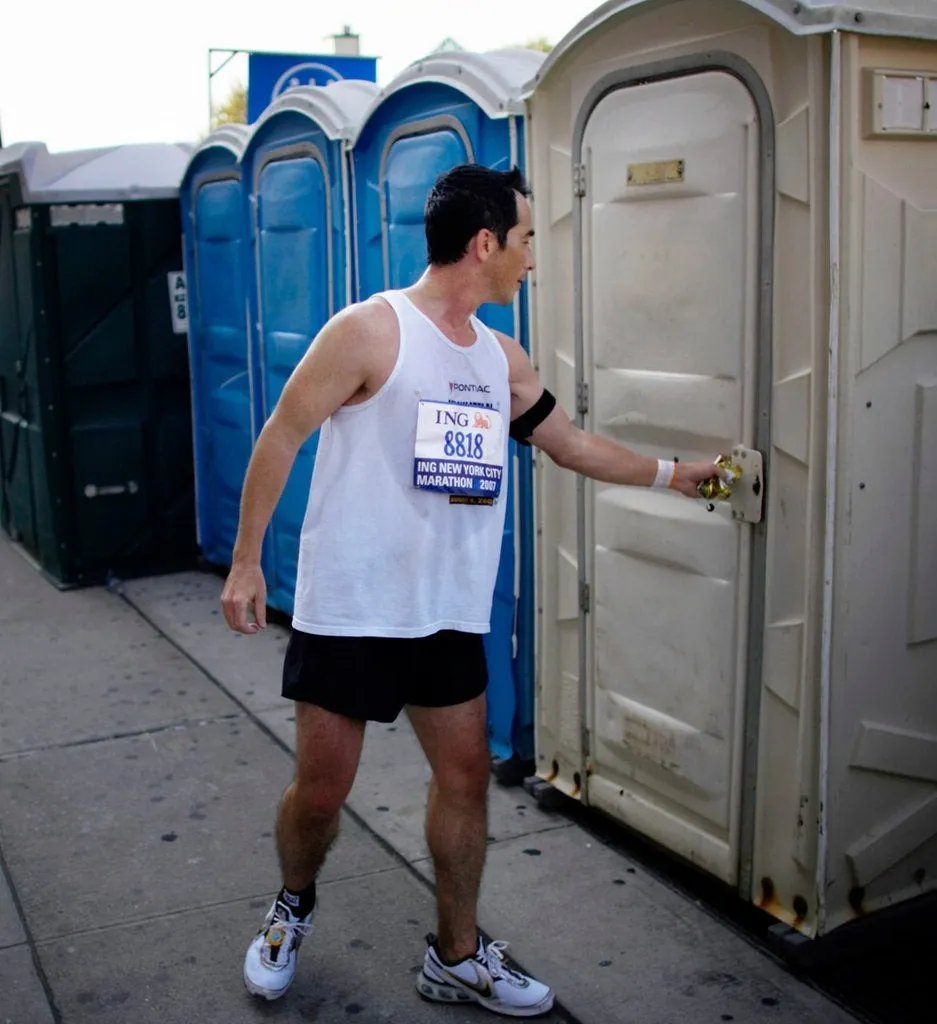
How many restrooms does a race route need?
Start with the start line and finish chute, since that's where most of your field bunches up before the gun and right after they cross. A standard porta potty rental runs 44 by 48 inches on the ground and about 92 inches tall, so it fits on a sidewalk apron or a grass strip without eating into the course. For a mid-size race, we typically place clusters of four to six units at the start, a smaller cluster at the finish, and single units at aid stations spaced along the route. ANSI/PSAI Z4.3 sets a baseline service interval of once per week for steady use, but a race day is a single high-volume event, not a steady office crowd, so we plan tank capacity around total expected users rather than that weekly baseline. Each unit holds 60 to 70 gallons, which covers a few hundred uses before it needs attention. If your course runs through Glendora and touches a neighboring town, we can stage units along the same route since porta potty rental in San Dimas, CA is only 4.6 miles southeast and falls inside the same service run. Races that expect a big field sometimes add a restroom trailer rental at the finish line for a nicer flushing option than stacked standard units. Check our marathon and race restrooms guidance again once you have a rider count, because that number drives everything else on this page.
Where should restrooms go on a closed course?
Placement matters more on a race course than almost any other event type, because runners can't wander far off route to find a unit. Put restrooms where the crowd already gathers: start corrals, finish chutes, and any aid station with a line for water or gels. Keep a 36 inch clear path to each unit per ADA Standards 403.5.1, and make sure the door swings clear at the 32 inch minimum opening in ADA Standards 404.2.3. On grass or gravel, ADA Standards 302.1 calls for a stable, firm, slip resistant surface, so we set accessible units on mats or a paved apron if the ground is soft. If your race needs generator-powered lighting or a sound system near the finish, our crews handle the temporary power pole setup too, and how to brace a temporary power pole against wind or a jostling crowd is part of that install: we guy it, sandbag the base, and keep the cable run away from the route so nobody trips at mile 24. Pair that with a light tower rental for a pre-dawn start in Glendora, when visibility at the corral matters as much as the restroom count. For barrier at the start and finish, a temporary fence rental or a run of crowd control barrier rental keeps spectators off the course without blocking restroom access. Aid stations further out on the route, closer to Charter Oak at 4.6 miles south, still need at least one unit each if runners spend more than a couple minutes there.
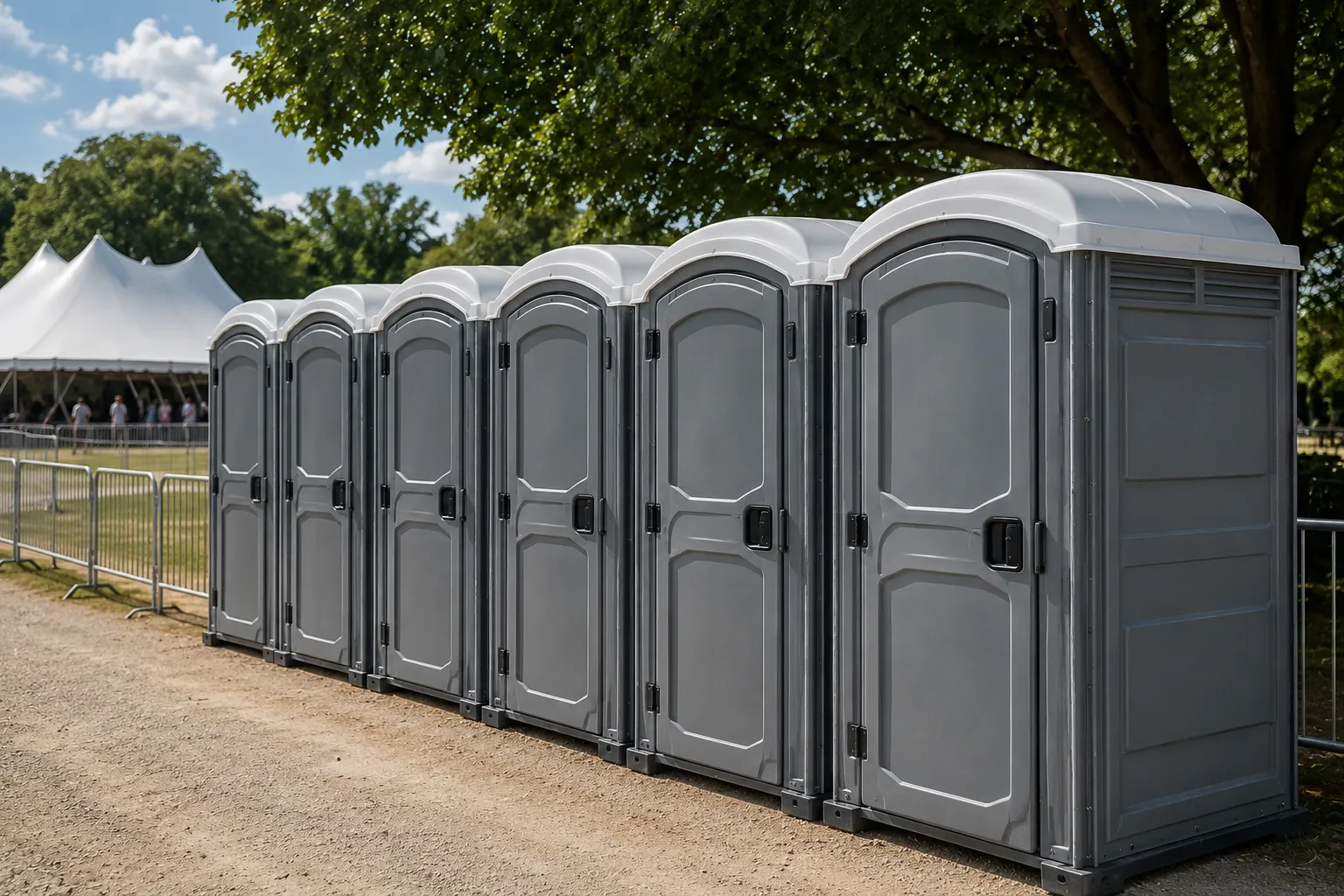
What do race restrooms cost for a one-day event?
Race day pricing runs by the day or the weekend, not by the month, since most courses only need units for a single event window. A standard unit in the event tier typically falls between $200 and $400, while an ADA unit for a single day runs $200 to $400 as well, and a deluxe flushable option can go much higher depending on features. Delivery adds a flat fee on top of the unit price.
| item | day rate | notes |
|---|---|---|
| standard unit | $100 to $350 | typical race-day range $200 to $400 event pricing |
| ADA unit | $200 to $400 | required at 5 percent of clustered units minimum |
| delivery fee | $100 to $500 | one-time, not per unit |
| service fee | $100 to $300 | pickup and pump after the event |
Full details live on our porta potty rental cost page and our porta potty rental per day breakdown. Handwashing matters too: 29 CFR 1910.141(d)(2) requires soap and towels or a hand-drying device, not sanitizer alone, so we pair units with a handwashing station rental at the finish line where runners grab food.
How far in advance should I book race restrooms?
Book as soon as your course map and expected field size are set, ideally four to six weeks out for a Glendora race with road closures. Permit coordination with the city can take time, so lock the layout early and request your quote before the closure paperwork is due.
Do I need an ADA unit even for a small local 5k?
Yes. ADA Standards 213.2 requires at least one accessible unit whenever units are clustered, with no exception for field size. See our ADA accessible porta potty page for spacing and turning-circle specs.
Can restrooms be moved along the course after the race starts?
Not safely once runners are on course. We stage everything before the gun and plan aid station units as fixed points, matching our porta potty placement guide for closed-route events.
What happens to restrooms right after the finish line clears?
Our crew pumps and pulls units within hours of the last finisher, based on the service fee tier in your contract. Ask about same-day teardown when you request a quote.
Are restrooms cleaned during a multi-hour race?
For events past four or five hours, we can schedule a midday service visit. Otherwise units are sized and placed based on total field count per our how many porta potties do I need guide.
Next step
Get a delivery date
Tell us the address, the dates and the headcount. We size the order and confirm the route.