
How does a standard porta potty actually work?
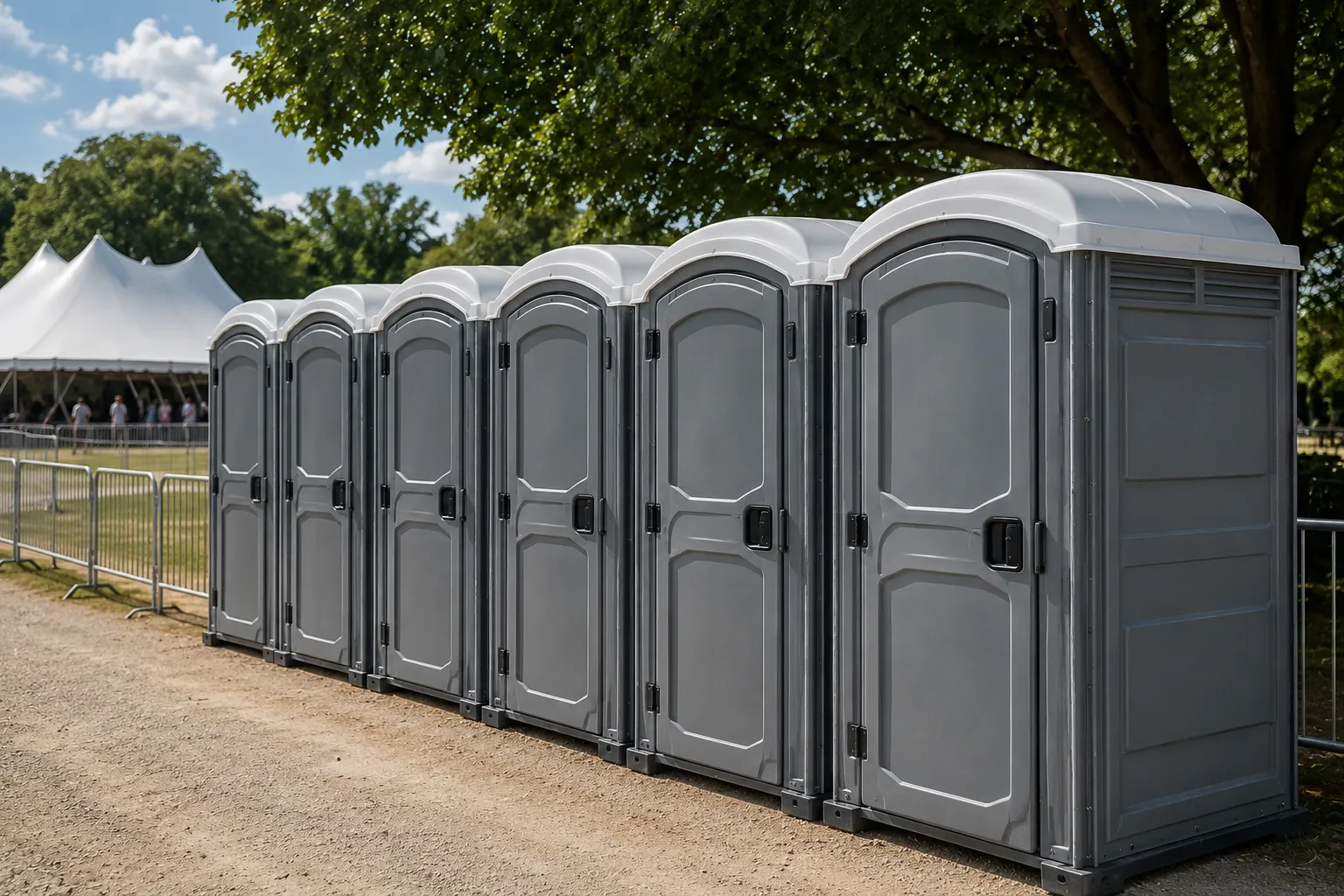
Picture the unit like a self-contained tank with a seat on top. Waste drops into the 60 to 70 gallon holding tank, and a blue chemical solution in the tank breaks down solid waste and knocks down odor between services. There's no flush handle and no water line, which is the whole point: it works anywhere a construction worker running to a porta potty needs it, no plumbing required. A standard unit measures about 44 by 48 inches on the ground and stands roughly 92 inches tall, so it fits in tight spots on a Glendora lot without eating up staging space. Vent stacks pull odor up and out rather than back into the stall. Service crews come by on a set interval, per ANSI/PSAI Z4.3, pump the tank, refill the chemical, and restock supplies. That baseline is one visit a week for up to 10 users over a 40 hour week, which is why how often porta potties get cleaned depends on headcount, not just calendar days. Renters comparing options can check the standard porta potty rental page for the base unit, or look at porta potty rental cost in Glendora before booking. If you're not sure how many you need for a crew, the how many porta potties do I need guide walks through it.
How do flushable porta potties work?
A deluxe flushable unit adds a small onboard freshwater tank and a foot pump or hand pump that pushes a rinse of water into the bowl after use, similar to a low-flow RV toilet. It still drains into the same style of holding tank underneath, it just uses water to move waste down instead of relying on gravity and chemical alone. That upgrade also usually means a sink, hand sanitizer, and better lighting inside. The deluxe flushable porta potty page has specs if you want the step up from standard for a wedding or office trailer setup. Camping and RV-style events lean on these units too, and anyone planning a trip can check camping porta potty options before heading out near La Verne or Azusa. For accessible stalls, an ADA unit follows ADA Standards section 304.3.1, which calls for a 60 inch turning circle inside, plus a wider door and grab bars; see ADA accessible porta potty for what that unit includes. Under ADA Standards section 213.2, any cluster of single-user portable toilets needs at least 5 percent accessible, and never fewer than one unit, which matters for anyone running a Glendora festival or fair.
How does a portable sink work?
A portable sink is its own small closed system: a freshwater tank feeds a hand pump or foot pump, water runs over your hands into a gray water tank underneath, and soap sits in a dispenser on the unit. Nothing connects to a building's water line. Under 29 CFR 1910.141(d)(2), washing facilities need soap and towels or a hand drying device, and hand sanitizer alone does not satisfy that. That's why most job sites and food events pair a handwashing station rental with the toilets rather than relying on sanitizer stations alone, though a hand sanitizer station rental is fine as a supplement. If your crew handles paints, coatings, herbicides or insecticides, OSHA 1926.51(f)(1) requires washing facilities specifically for that contaminant exposure, not just general cleanup. Standalone units are covered on the portable sink rental page, and the fuller breakdown of what's required lives at handwashing station requirements. Glendora renovation crews often add one sink per two toilets on a busy site.
Why do porta potties need chemicals, and how does the septic side work?
The blue liquid in a porta potty tank is a deodorizing and waste-breakdown chemical, similar in purpose to what's used in RV holding tanks, and it's a different product from what a residential septic tank needs. Septic tank cleaning chemicals for a house tank are a separate category, and honestly, most Glendora septic professionals will tell you chemical additives are not a substitute for pumping. A typical residential septic tank gets pumped every 3 to 5 years, depending on tank size and household size. If your tank backs up between scheduled visits, that's a sign to call for septic tank pumping cost information and get someone out, and warning signs are covered at septic tank warning signs. Restaurants and food trucks in Glendora deal with a related but different system: a grease interceptor, pumped once fats, oils, grease and solids reach 25 percent of the liquid depth, per standard industry practice; see grease trap pumping for that service. For general job site sanitation counts, OSHA 1926.51(c)(1) sets the ratio at 1 toilet for 20 workers or fewer, scaling up from there, which is the backbone of the OSHA portable toilet requirements guide.
Do porta potties smell if they're serviced on schedule?
Not much, if service stays on schedule. The chemical deodorizer controls odor between pump-outs, and the vent stack pulls smell upward and out rather than into the stall. Miss a service date, or overload a unit with more users than it's rated for, and odor builds fast. See do porta potties smell for more.
How do camping porta potties work compared to job site units?
Same basic tank-and-chemical setup, just smaller and often self-contained for towing or hand-carrying. Some camping units use a cassette-style tank you empty yourself rather than a scheduled service. For group camping or an outdoor event near San Dimas, a rented standard unit with weekly service is usually simpler than several small camp toilets.
What does a construction worker need to know before using a job site unit?
Check that the unit has toilet paper and that the door locks from inside; report anything broken to the site supervisor so service can be called. OSHA 1926.51(c) sets minimum toilet counts by crew size, so a properly staffed Glendora site should never have a long line at shift change.
How far apart should units be placed on a big site?
There's no fixed universal distance, but placement should account for foot traffic patterns and truck access for the service vehicle. A porta potty placement guide covers layout basics, and delivery crews generally want clear, level ground near a route the pump truck can reach.
Is a chemical-tank porta potty the same as a septic system?
No. A porta potty's chemical tank breaks down waste for temporary holding until it's pumped, while a septic system uses bacteria and a drain field for ongoing treatment. They're built for different timeframes and different waste volumes entirely.
Next step
Get a delivery date
Tell us the address, the dates and the headcount. We size the order and confirm the route.